If there is a front door to the modern UFO mystery, it is Roswell.
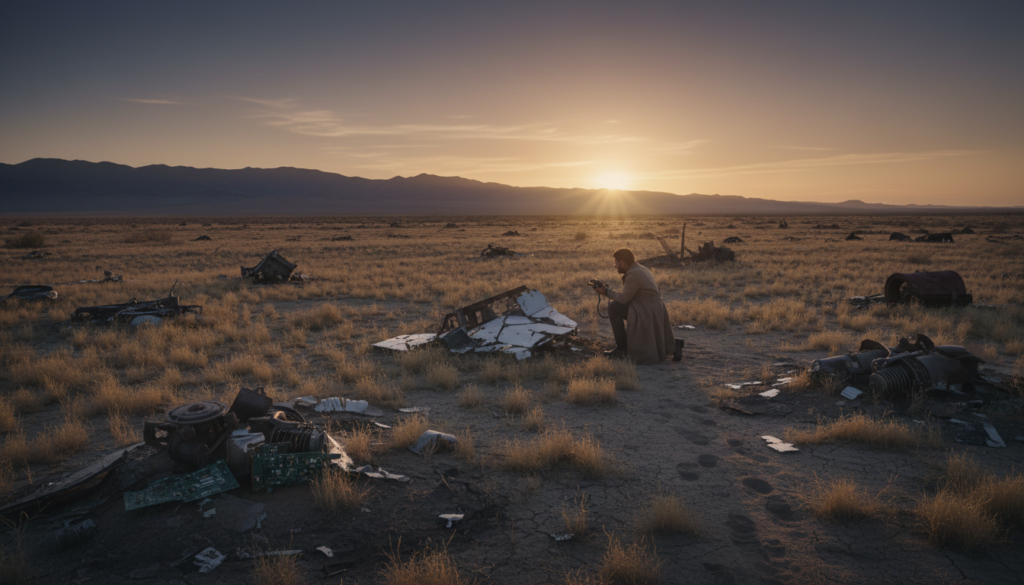
Not because Roswell gives you a neat answer. It does the opposite. It opens with the kind of detail that should have become simpler over time and somehow became more complicated instead. In July 1947, debris was found on a ranch outside Roswell, New Mexico. The Army Air Forces first put out a statement saying personnel from Roswell Army Air Field had recovered a “flying disc,” then quickly reversed course and said the material was only a weather balloon. That sequence is not folklore. That sequence is part of the historical record.
That is why Roswell never goes away. The case did not begin as a campfire story passed around by enthusiasts decades later. It began with an official announcement, a rapid retreat, and a chain of explanations that never quite killed public suspicion. The Air Force’s own 1994 report acknowledges that something happened near Roswell in July 1947 and that contemporary reporting exists; its position is that the recovered debris was most likely tied to a then-classified Project Mogul balloon array rather than an extraterrestrial craft. The official line, in other words, evolved from weather balloon to classified balloon surveillance program. That evolution matters because once a story changes under pressure, every later detail is read through the lens of damage control.
The atmosphere of Roswell is what keeps pulling people back. The summer of 1947 was already charged. Kenneth Arnold’s sighting near Mount Rainier had just ignited national fascination with “flying saucers,” and the country was in the early tension of the Cold War. Roswell Army Air Field was not some quiet provincial outpost, either. It was home to the 509th Bomb Group, the only atomic-capable unit in the world at that time. That matters to the psychology of the case. If unusual debris turned up near one of the most strategically important military installations in the United States, it was never going to be treated casually, whatever it actually was.
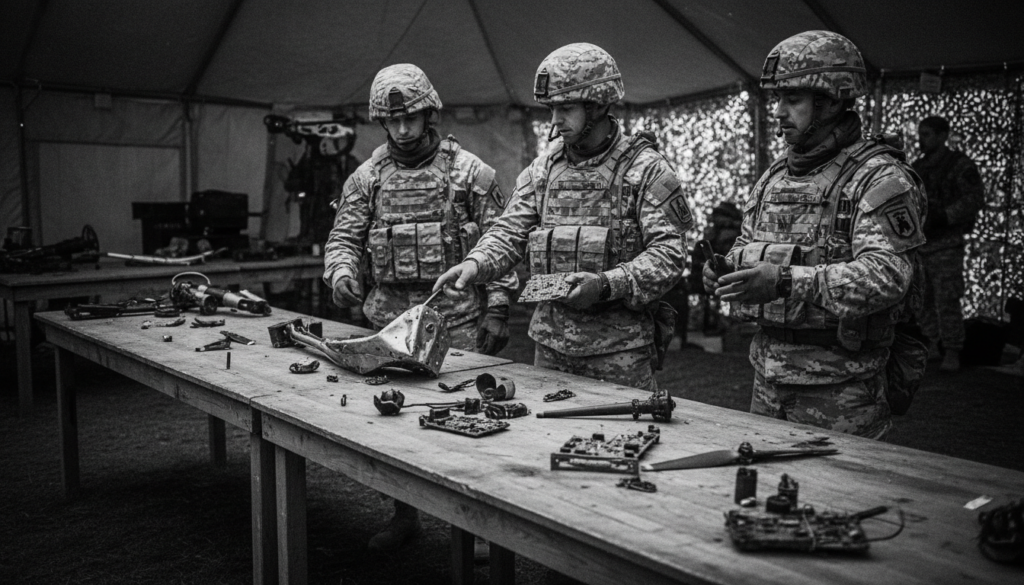
The official explanation deserves to be taken seriously, because this is where too many Roswell retellings get lazy. Project Mogul was real. It involved long balloon trains and instrumentation intended to detect Soviet nuclear activity. It was classified, and secrecy alone can explain why officers might have preferred a simpler public story in the short term. The Air Force report argues that the recovered material was consistent with one of those devices and says its researchers found no records showing recovery of alien bodies or extraterrestrial materials. If you are writing about Roswell honestly, you do not get to skip that. You have to put the official explanation on the table in full view.
But Roswell persists because the official answer solves one problem and leaves another standing in the doorway. If the explanation is straightforward, why did the first announcement use language as explosive as “flying disc”? Why did the story harden so quickly into a public display of debris and a corrective narrative? Why did the case gather such staying power that a GAO inquiry decades later was tasked with searching for records about the 1947 crash near Roswell? The existence of later government review does not prove an alien event. It proves something more interesting for a writer: Roswell did not die as an administrative footnote. It lingered long enough to require formal revisiting by the state itself.
If you want to dip your toes in the water, check out The UFO Experience: Evidence Behind Close Encounters, Project Blue Book, and the Search for Answers (MUFON) by J. Allen Hynek.
What deepens the Roswell mystery is not one dramatic claim but the layering of claims. There is the debris field. There is the military response. There is the reversal in public explanation. Then there are the witness accounts that accumulated later: descriptions of strange, lightweight material; claims of unusual symbols on debris; allegations that bodies were recovered. Those later claims are where the case becomes foggier and more dangerous for a writer, because the evidence is uneven. Many of the body-recovery stories surfaced long after the event. The Air Force’s 1997 “Case Closed” report explicitly argued that alleged “alien body” memories likely drew from later military programs, test dummies, accidents, and the distortions of time. That does not settle the matter for believers, but it means you cannot write those claims as if they arrived with the same evidentiary weight as the July 1947 press statements.
That is the Roswell trap. The case is strongest where it is most restrained. You do not need to overplay it. You already have enough. A strategically sensitive air base. A debris recovery. An official “flying disc” release. A same-day public reversal. A later classified-program explanation that arrived decades after the fact. That is not proof of extraterrestrials. It is something harder to dismiss in a serious way: a documented event in which the state’s own account shifted over time, while public fascination deepened instead of fading.
There is also a structural reason Roswell remains the central case in UFO history. It established a pattern that later incidents seem to echo. First comes the observation or recovery. Then comes institutional containment. Then comes a public explanation that may be plausible but leaves residue. Then, years later, the residue becomes the real story. Roswell trained generations of researchers to stop reading only the headline and start reading the sequence. The sequence is where the tension lives. It is why Roswell still feels less like a solved mystery than a locked file somebody closed too fast.
That feeling is why Roswell is bigger than the question of whether extraterrestrials crashed in New Mexico. Roswell is about information control under pressure. It is about the distance between what institutions say first and what they say later. It is about how secrecy contaminates trust even when secrecy has a conventional explanation. Project Mogul may account for the debris. It does not erase the cultural effect of the reversal. And once that effect exists, every later witness, every archive request, every official denial, and every fresh document enters a field already electrified by distrust.
That is why Roswell still works as a live SEO topic, decades after the fact. People do not keep searching “Roswell incident” because they expect one new miracle fact to appear. They search because Roswell remains the reference point for every later discussion of crash retrievals, military secrecy, and whether UFO evidence becomes less reliable or more revealing once institutions begin to manage it. Search terms like what happened in Roswell, Roswell UFO incident explained, Roswell crash evidence, Project Mogul Roswell, and was Roswell a weather balloon all orbit the same unresolved center. The case survives because it contains both a rational explanation and the suspicion that the rational explanation arrived wearing a disguise.
If you track historical cases yourself, a durable research notebook helps keep witness claims, dates, and source conflicts organized. I use the Expedition Edition Waterproof Notebook.
The Rendlesham Forest incident is different in texture but similar in structure. The UK National Archives holds Ministry of Defence material on the case, including the famous Halt memo about unexplained lights near RAF Woodbridge. Again, the pattern appears: a military setting, a report chain, conflicting interpretations, and decades of argument over whether the underlying event was mundane, misperceived, or something genuinely strange. Roswell gives you the archetype. Tehran and Rendlesham show you the archetype did not stay in 1947.
You can even widen the lens further by remembering that the U.S. Air Force’s own Blue Book program logged 12,618 UFO sightings, of which 701 remained unidentified when the project ended. That statistic does not validate any single dramatic claim, and it certainly does not prove Roswell was extraterrestrial. What it does show is that the U.S. government itself built an administrative history around persistent aerial reports and did not explain all of them away. Roswell lives inside that larger atmosphere of recurring uncertainty.
This is where the spy-thriller quality of Roswell really comes from. Not aliens in a desert. Not little bodies under sheets. The real tension is bureaucratic. A file opens, closes, reopens. A statement is issued and withdrawn. An explanation appears, then a later explanation replaces it. The event remains fixed in time, but the narrative around it keeps moving. That is more unnerving than spectacle, because it suggests the mystery is not only in the sky or on the ground. It is in the handling.
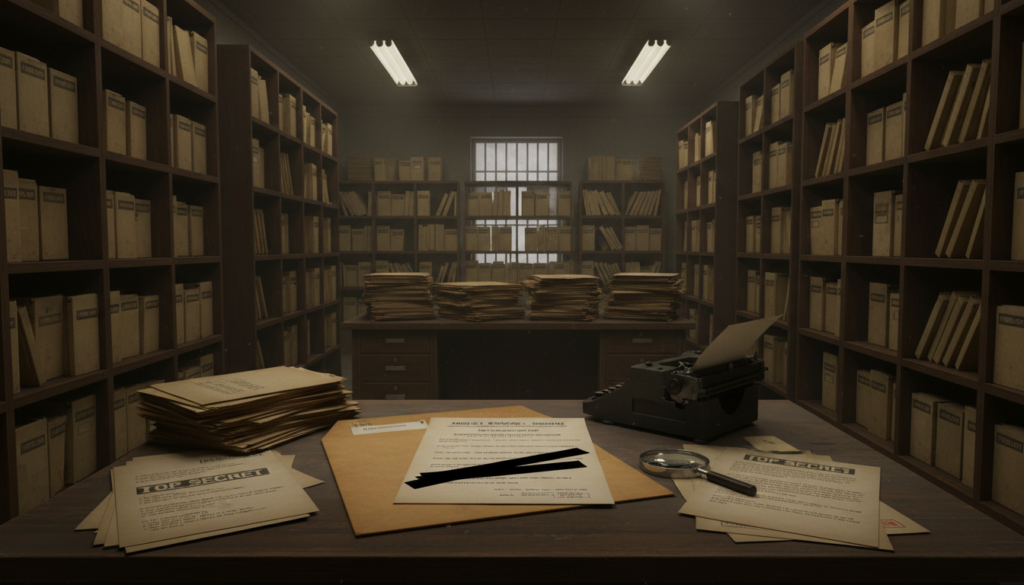
The cleanest conclusion is also the most honest one. Roswell is not compelling because it gives certainty. It is compelling because certainty was promised too quickly. A “flying disc” became a weather balloon, then later became Project Mogul. Witness memory kept pushing outward while official explanation kept moving inward. The reader is left where all enduring UFO cases leave them: not with proof, not with closure, but with the unmistakable sense that the record is more complicated than the public was first told. That is enough to keep Roswell alive. It has been enough for nearly eighty years.
It’s important to keep your eye on the night sky, but make sure you know what you’re looking for. The Backyard Astronomer’s Guide by Terence Dickinson and Alan Dyer is the perfect starting place.
_____________
Some links on this page are affiliate links. This does not influence inclusion or analysis. I make a small commission on every purchase, but it does not cost you any additional money.